
Completed Projects
SIGMA - Investigating Internal Magnetic Field Sources on the Moon and Mars
SIGMA - Investigating Internal Magnetic Field Sources on the Moon and Mars
Funding entity: EUROPEAN COMMISSION
Contract: 893304
The Earth has a global magnetic field produced by a dynamo phenomenon. A comprehensive understanding of its mechanisms requires an in-depth study of its evolution from its inception to its end, for which the rocky planets of the Solar System provide a natural laboratory. Among these planets, only Mercury is known to have a global field, although both the Moon and Mars exhibit crustal magnetic anomalies. These crustal fields preserve fundamental information about the planets' global fields in their early stages, which magnetized them.
The study of these crustal fields on bodies such as Mercury, Earth, and Mars, where different dynamos have operated, offers a path to understanding their processes.
The SIGMA project aims to unravel some of the unanswered questions about the Earth's global field by studying crustal anomalies on the different planets.
ELGeoPoweR - Lithospheric Structure and GEOdynamics of the El Drake-Bransfield Rift
Funding entity: State Secretariat for Universities, Research, Development, and Innovation and State Research Agency, Ministry of Science, Innovation, and Universities. Reference: RTI2018-099615-B-I00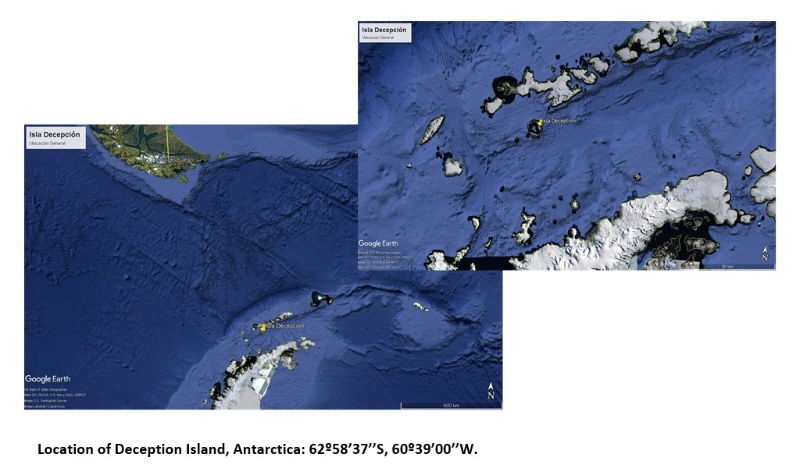
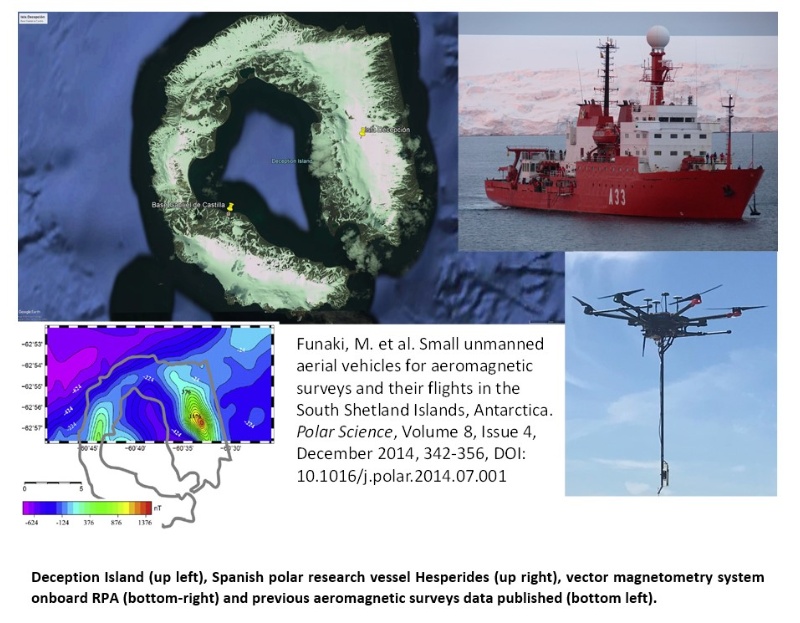
A project led by the Royal Naval Institute and Observatory (ROA) aims to deepen our understanding of the geodynamics of four zones: the Bransfield Strait, the Powell Basin, the triple junction south of the Shackleton Fracture Zone, and Deception Island. INTA's collaboration on this project focuses on the Bransfield Strait and specifically on a magnetic survey of Deception Island using drone-based magnetometry equipment developed within the MAGMA project. The ultimate goal is to understand whether the formation of volcanoes is related to the final stages of rifting or the initial stages of seabed formation.
MAGMA
Contract with: Magma NFQ Ventures
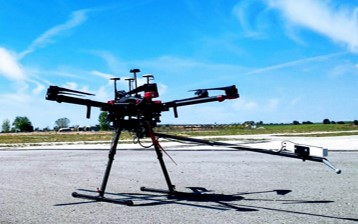
This is a public-private research project aimed at developing a new advanced magnetometry methodology. The project aims to generate high-resolution vector magnetic data aboard drones using a multi-rotor platform and a payload assembly mounted on a retractable boom.
The scientific objective is to discriminate, using magnetic signatures, structures with similar topography, such as craters produced by explosive volcanic events and those produced by meteorite impacts.

MagAres
Funding entity: State Secretariat for Universities, Research, Development, and Innovation and State Research Agency, Ministry of Science, Innovation, and Universities. Reference: ESP2017-88930-R
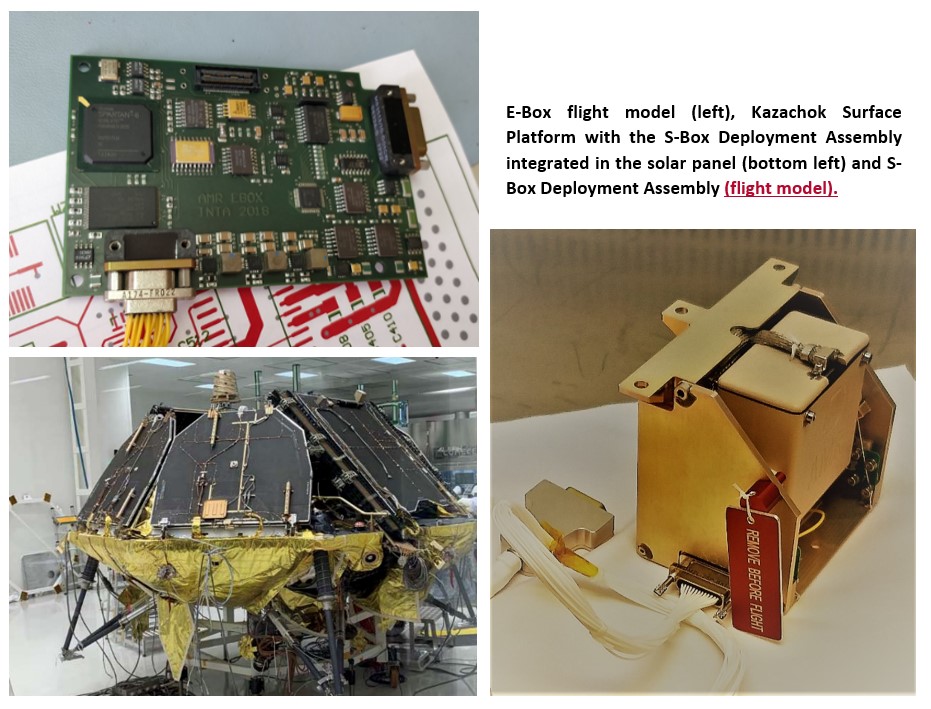
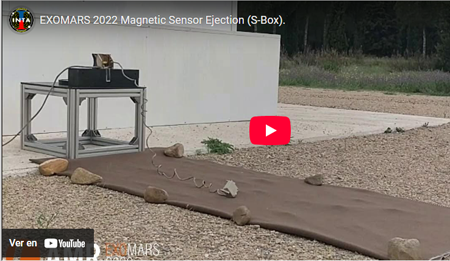
The project is part of the ExoMars mission, the major European Mars exploration mission. The research team's mission is to develop an instrument for characterizing the magnetic environment on the planet's surface.
This project, a continuation of the MapsMars project, aims to develop the AMR instrument from the Structural Thermal Model (STM) to the Flight Model and Flight Spare (FM and FS) models.
NEWTON- New portable multi-sensor scientific instrument for noninvasive on-site characterisation of rock from planetary surface and sub-surfaces
Funding entity: EUROPEAN COMMISSION, Research Executive Agency (REA). Contract: 730041
This project aims to develop a highly miniaturized and compact multi-sensor instrument for high-resolution measurement of the complex susceptibility of rocks. The ultimate goal is to combine vector magnetometry with complex susceptibility measurements to obtain better information on rock magnetization in the context of planetary exploration.

Maps Mars – Measuring magnetic properties on the surface of Mars: MAG-TRACE instrument for ExoMars’18 and precursor research on Earth-based analogs.
Funding Entity: Subdirectorate General for Research Projects, Directorate General for Scientific and Technical Research, State Secretariat for Research, Development and Innovation, Ministry of Economy and Competitiveness. Reference: ESP2015-70184-R
The project is part of the ExoMars mission, the major European mission to explore Mars. The research team's mission is to develop an instrument for characterizing the magnetic environment on the planet's surface. The applicant team proposes a completely innovative MAG-TRACE instrument consisting of two vector magnetometers and a compact and miniaturized real-imaginary susceptometer for the ExoMars '18 mission. Finally, an agreement was reached with the European Space Agency to develop a magnetometer and gradiometer. This project involves redefining the instrument and its initial stages.